

- English 101
- English 201
- English 301
- English 401
- Advanced English 501
- Creative Writing
- Introduction to Literature
- College Writing
PROGRAM OVERVIEW
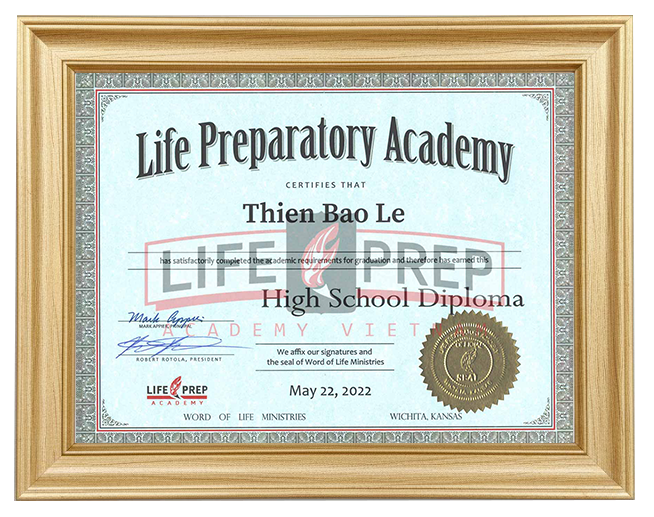
The High School Program (Grades 9–12) at Life Prep Academy is designed in alignment with the U.S. educational system, enabling students to fulfill all high school graduation requirements while building a strong academic foundation for university study and future career pathways in an international environment. Students may pursue the U.S. High School Diploma through Life Prep Academy at either its U.S. or Vietnam campus.
High school marks an important transition from acquiring knowledge to developing independent academic thinking. Students strengthen their skills in research, critical analysis, academic writing, public speaking, and problem-solving while gaining the confidence to take greater ownership of their learning. In addition to completing a rigorous core curriculum, each student follows an individualized academic pathway, selecting courses that reflect their interests, strengths, and long-term goals. Opportunities in research, the arts, athletics, leadership, and community service further support students in building a well-rounded profile for college admission.
To meet the diverse needs and aspirations of its students, the program offers multiple levels of academic challenge, including Standard, Honors, Advanced Placement (AP), and General Education university courses taught at Life Prep by faculty from Wichita State University. This progressive academic pathway allows students to maximize their potential, earn advanced academic credit, and prepare for higher levels of study while still in high school.
EDUCATIONAL PHILOSOPHY
U.S. High School Program
Students complete a U.S. standards-based high school curriculum using the Carnegie Unit credit system. The program fulfills graduation requirements and prepares students for admission to colleges and universities in the United States and around the world.
Honors Courses
Honors courses are designed for academically advanced students seeking greater intellectual challenge. These courses provide more rigorous content and higher academic expectations than the standard curriculum while preparing students for college-level study.
Advanced Placement (AP)
Developed in accordance with College Board standards, Advanced Placement (AP) courses give students the opportunity to engage with college-level coursework during high school. Successful participation strengthens academic preparation and enhances competitiveness in the admissions process for highly selective colleges and universities.
College Courses
Selected university courses are taught at Life Prep Academy by professors from Wichita State University. Upon successful completion, students receive an official university transcript and earn transferable college credits before graduating from high school, helping them reduce both the time and cost required to complete a college degree.
College & Career Counseling
Beginning in Grade 9, students work closely with college and career counselors to develop a personalized academic and postsecondary plan. Counseling includes course selection based on each student’s strengths and goals, preparation for the SAT/ACT and TOEFL, extracurricular planning, guidance on personal statements, scholarship planning, and comprehensive support throughout the college application process, with the goal of helping students gain admission to leading universities in the United States and around the world.
ACADEMIC PROGRAM
Placement in the academic program is determined through a combination of each student’s Placement Test, previous academic records, and Personalized Study Plan. This individualized placement process ensures that students begin at the level best suited to their current academic readiness while providing opportunities to advance into Honors, Advanced Placement (AP), and College Courses as they meet program prerequisites and academic expectations.
At Life Prep Academy, every course is an opportunity for students to discover their strengths, pursue their interests, and shape their future academic path. International students are encouraged to explore the school’s course offerings before enrollment to gain a clear understanding of the curriculum, identify areas of interest, and become familiar with course expectations. This preparation also supports informed course selection, appropriate class placement, and readiness for the student visa interview process.
Selecting courses that align with a student’s abilities, interests, and intended college major is an important step in building a personalized academic pathway. Thoughtful course planning enables students to maximize their strengths, develop a distinctive academic profile, and establish a strong foundation for admission to leading colleges and universities. The course catalog is reviewed and updated regularly to reflect U.S. educational standards, emerging academic trends, and the evolving needs of students.
We invite you to explore the academic disciplines and detailed course descriptions below to learn more about each area of study, discover subjects that inspire your interests, and begin designing an academic journey that reflects your individual goals at Life Prep Academy.
ACADEMIC PROGRAM AREAS
- Basic Math
- Pre-Algebra
- Algebra I
- Geometry
- Algebra II
- Consumer Math
- Pre-Calculus
- Honors College Algebra
- AP Calculus
- Earth & Space Science
- Physical Science
- Biology
- Fundamentals of Biology
- Anatomy & Physiology
- Chemistry
- Honors Chemistry
- Physics
- Science Ethics
- World Geography
- Cultural Geography
- World History
- United States History
- AP U.S. History
- S. Government
- Economics
- Psychology
- AP Psychology
- Computer Applications
- Computer Programming
- Engineering
- Robotics
- STEM
- Web Development
- Introduction to Business
- Business Procedures
- Modern Marketing
- College & Career Readiness
- Art
- Studio Art
- Graphic Design
- Media Arts
- Theater
- Choir
- Band
- Strings
- Journalism
- Yearbook
- Spanish
- Latin
- American Sign Language
- Foreign Language
- Nutrition & Health
- Physical Education
- Weight Training
- Sports Training
- Debate & Forensics
- Public Speaking
- Chess
- Cooking
- Film & Drama
- Community Service
- Independent Study
Depending on the academic year, students may choose from a variety of elective courses designed to broaden their academic experience, develop new skills, and explore personal interests. Elective offerings may include Debate & Forensics, Public Speaking, Chess, Cooking, Film & Drama, and a range of other specialized courses.
ENGLISH LANGUAGE ARTS
The English Language Arts (ELA) program at Life Prep Academy follows a carefully sequenced curriculum that supports students’ academic growth from foundational language development to advanced proficiency. Through a comprehensive study of both classic and contemporary literature, students strengthen their reading, writing, listening, and speaking skills within a rigorous U.S. academic environment.
As students progress through the program, they develop critical thinking, research, analytical writing, and effective communication skills while building the strong academic literacy needed for success in Honors, Advanced Placement (AP), and college-level coursework.
English 101 is a foundational English Language Arts course designed to strengthen students’ vocabulary, reading comprehension, literary analysis, and academic writing skills. Through the study of short stories, novels, poetry, and drama, students develop essential skills in written communication, presentations, and collaborative discussions. Featured literary works, including Across Five Aprils and The Bronze Bow, provide opportunities to build critical reading, analytical thinking, and effective written expression.
This course further strengthens students’ academic English proficiency by advancing their reading, writing, communication, and literary analysis skills. Students expand their academic vocabulary, reinforce their understanding of grammar, and engage in the study of classic literary works, including The Adventures of Tom Sawyer, The Hiding Place, and William Shakespeare’s Julius Caesar.
Through close reading, analytical writing, and classroom discussions, students develop the ability to think critically, construct well-supported arguments, and communicate their ideas with clarity, confidence, and precision.
English 301 advances students’ literary analysis and academic English proficiency through the study of increasingly sophisticated texts. Students examine themes, characterization, literary style, and authorial techniques in works such as The Diary of Anne Frank and Flowers for Algernon while strengthening their analytical reading skills.
The course also emphasizes analytical writing, critical response, and research-based academic writing aligned with U.S. educational standards, preparing students for more rigorous Honors, Advanced Placement (AP), and college-level English coursework.
This course serves as the capstone of the high school English curriculum, preparing students for Honors, Advanced Placement (AP), and college-level coursework. Students build advanced proficiency in grammar, etymology through the study of Latin and Greek roots, academic research, and scholarly writing.
The curriculum features the study of classic literary works, including Hamlet, To Kill a Mockingbird, and The Adventures of Huckleberry Finn. Through close reading, literary analysis, and research-based writing, students strengthen their critical thinking, develop independent research skills, and refine the advanced writing abilities essential for success in higher education.
Advanced English 501 is an advanced course designed for high-achieving students preparing for the academic demands of college-level study. The curriculum emphasizes in-depth literary analysis, advanced academic writing, research methodology, source evaluation, and the development of evidence-based arguments in accordance with U.S. college writing standards.
Students engage with classic works of literature, including A Tale of Two Cities by Charles Dickens, along with other significant texts. Through close reading, independent research, and analytical writing, they strengthen critical thinking, refine scholarly writing skills, and develop the academic independence essential for success in higher education.
The Creative Writing course encourages students to explore their creativity through a variety of literary forms, including short stories, poetry, drama, memoir, and creative nonfiction. Through the processes of drafting, revising, and peer critique, students develop their ability to use language effectively while strengthening their skills in character development, plot construction, narrative voice, and personal writing style. The course also fosters imagination, creative expression, and confidence as students discover and refine their unique voices as writers.
This course introduces students to the foundational concepts of literary studies through a wide range of genres, including short stories, novels, poetry, drama, and nonfiction. Students learn to analyze themes, characters, setting, symbolism, and literary techniques while strengthening their reading comprehension, class discussion, and academic writing skills. Through close reading and critical analysis, they develop the ability to interpret texts thoughtfully and communicate their insights with clarity and evidence.
The College Writing course prepares students for the academic writing expectations of higher education. Students develop essential skills in research, source evaluation, academic argumentation, essay organization, and scholarly citation while learning to produce college-level writing aligned with U.S. academic standards. The course also strengthens critical thinking, information synthesis, and the ability to communicate ideas with clarity, logical reasoning, and persuasive support.
The academic program follows the U.S. credit-based system and includes core courses, advanced coursework, college-level classes, and elective options. This comprehensive curriculum enables students to build a strong academic foundation while developing the knowledge, skills, and career readiness needed for future success.
MATHEMATICS
The Mathematics program at Life Prep Academy is designed as a progressive academic sequence that guides students from foundational concepts to advanced study in alignment with U.S. educational standards. The curriculum develops logical reasoning, analytical thinking, mathematical modeling, and problem-solving skills while preparing students for Honors, Advanced Placement (AP), college-level coursework, and future studies in STEM fields, including engineering, computer science, economics, and finance.
Students are placed in mathematics courses based on their Placement Test results and demonstrated academic readiness rather than age or grade level alone. This approach ensures that each student is challenged at an appropriate level while providing opportunities to accelerate into more advanced coursework as they meet established academic requirements.
Recommended Grades: 6–8 (or based on Placement Test results)
Basic Math strengthens the foundational mathematical skills students need before progressing to Pre-Algebra. The course emphasizes computational fluency, number sense, and practical problem-solving through engaging, hands-on learning experiences.
Key topics include:
- Integers and Rational Numbers
- Fractions and Decimals
- Ratios, Proportions, and Percentages
- Rates
- Measurement
- Fundamental Geometry
- Statistics and Graphing
- Problem-Solving Strategies
By building confidence in essential math concepts and developing strong mathematical reasoning, the course provides students with a solid foundation for success in Pre-Algebra and future mathematics coursework.
Recommended Grades: 6–8 (or based on Placement Test results)
Pre-Algebra bridges the gap between foundational mathematics and Algebra I, equipping students with the essential concepts and skills needed for success in high school mathematics. The course develops algebraic thinking through a combination of mathematical reasoning, technology integration, collaborative learning, and real-world problem-solving.
Key topics include:
- Algebraic Expressions
- Linear Equations and Inequalities
- Polynomials
- Factoring Polynomials
- Fundamental Geometry
- Statistics and Data Representation
- Functions and Graphing
- Technology Applications in Mathematics
In addition to building mathematical proficiency, students strengthen logical reasoning, critical thinking, and their ability to apply mathematical concepts to real-world situations, establishing a solid foundation for future high school mathematics courses.
Prerequisite: Successful completion of Pre-Algebra or qualification through the Placement Test.
Algebra I is the first formal algebra course in the high school mathematics sequence. It introduces students to the language and structure of algebra while establishing the foundation for Geometry, Algebra II, and more advanced mathematics courses.
Key topics include:
- Real Numbers and Their Properties
- Algebraic Expressions
- Equations and Inequalities
- Linear Functions
- Systems of Equations
- Graphing Functions
- Polynomials
- Factoring Polynomials
- Real-World Applications of Algebra
Through the exploration of authentic mathematical problems, students develop logical reasoning, mathematical modeling, and data analysis skills while building the confidence and proficiency needed for continued success in higher-level mathematics.
Prerequisite: Successful completion of Algebra I.
Geometry introduces students to the principles of Euclidean geometry while developing the logical reasoning and proof-writing skills expected in a U.S. high school mathematics curriculum. The course connects geometric concepts with algebraic reasoning and real-world applications, helping students build a deeper understanding of mathematical relationships.
Key topics include:
- Geometric Proofs
- Relationships Between Lines and Angles
- Triangles
- Polygons
- Circles
- The Pythagorean Theorem
- Introductory Trigonometry
- Coordinate Geometry
- Perimeter, Area, and Volume
Through the study of geometric concepts and formal mathematical proofs, students strengthen spatial reasoning, analytical thinking, and problem-solving skills, preparing them for Algebra II, Pre-Calculus, and more advanced mathematics coursework.
Prerequisite: Successful completion of Algebra I and Geometry.
Algebra II builds on the concepts introduced in Algebra I while expanding students’ understanding of advanced mathematical relationships and functions. The course prepares students for Pre-Calculus, Calculus, and other upper-level mathematics coursework through increasingly rigorous problem-solving and mathematical analysis.
Key topics include:
- Functions and Graphs
- Quadratic Functions
- Polynomial Functions
- Rational Functions
- Exponential Functions
- Logarithmic Functions
- Systems of Equations
- Matrices
- Conic Sections
- Radical Expressions
By modeling and analyzing real-world problems, students strengthen advanced mathematical reasoning, analytical thinking, and quantitative problem-solving skills that are essential for future STEM studies.
Prerequisite: Successful completion of Algebra I or an equivalent course.
Consumer Math applies mathematical concepts to practical situations in personal finance, everyday life, and business. Designed to build real-world financial literacy, the course equips students with the quantitative skills needed to make informed decisions in today’s economic and professional environments.
Key topics include:
- Personal Budgeting
- Income and Expense Management
- Saving and Investing
- Taxes and Insurance
- Credit and Interest
- Loans and Installment Financing
- Basic Statistics
- Financial Data Analysis
Through authentic, real-life applications, students develop financial literacy, strengthen decision-making skills, and gain confidence in using mathematics to navigate everyday financial responsibilities.
Prerequisite: Successful completion of Algebra II and Geometry.
Pre-Calculus prepares students for AP Calculus and college-level mathematics by strengthening and extending their understanding of algebra, trigonometry, and function analysis. The course emphasizes mathematical reasoning, problem-solving, and the connections between algebraic and graphical representations of functions.
Key topics include:
- Polynomial Functions
- Rational Functions
- Exponential Functions
- Logarithmic Functions
- Trigonometric Functions
- Function Analysis and Graphing
- Matrices
- Determinants
- Systems of Equations
By developing a strong foundation in advanced mathematics, the course prepares students for success in AP Calculus, university-level mathematics, and STEM disciplines that require a high level of quantitative reasoning.
Prerequisite: Successful completion of Algebra II.
Honors College Algebra is an advanced mathematics course designed for high-achieving students seeking early exposure to college-level mathematical concepts while still in high school. The course emphasizes advanced algebraic reasoning, mathematical modeling, and analytical problem-solving in preparation for higher-level mathematics.
Key topics include:
- Functions
- Graphing and Function Analysis
- Linear Functions
- Quadratic Functions
- Polynomial Functions
- Rational Functions
- Piecewise Functions
- Exponential Functions
- Logarithmic Functions
- Inequalities
- Technology Applications for Mathematical Modeling and Data Analysis
In addition to mastering advanced algebraic concepts, students develop analytical reasoning, mathematical proof techniques, and the ability to solve complex problems, providing a strong foundation for Calculus and college-level mathematics coursework.
Prerequisite: Successful completion of Pre-Calculus or an equivalent course.
AP Calculus is the most advanced mathematics course offered at Life Prep Academy. Developed in accordance with the College Board AP curriculum, the course prepares students for the AP Calculus Exam and rigorous university study in STEM disciplines.
Key topics include:
- Limits
- Continuity
- Derivatives
- Implicit Differentiation
- Applications of Derivatives
- Integrals
- Techniques of Integration
- Differential Equations
- Sequences and Series
- Graphical Analysis
Through college-level mathematical reasoning and problem-solving, students develop the analytical skills required for advanced study in Engineering, Computer Science, Artificial Intelligence, Economics, Finance, and other STEM-related fields.
SCIENCE
The Science program at Life Prep Academy is built on the principles of U.S. STEM education, integrating rigorous academic instruction with laboratory experiences, scientific inquiry, and real-world problem-solving. Students are encouraged to observe, ask meaningful questions, develop hypotheses, design experiments, analyze data, and communicate their findings using the scientific method.
Through hands-on learning and inquiry-based instruction, students cultivate critical thinking, creativity, and analytical skills while building a strong foundation in the sciences. The program prepares students for Honors and Advanced Placement (AP) science courses, as well as future study in STEM disciplines at the university level.
SCIENCE
Recommended Grade Levels: 8–9
Earth & Space Science introduces students to the fundamental principles that govern the structure, formation, and dynamic processes of Earth, the solar system, and the universe. The course explores the relationships among natural phenomena and examines their impact on Earth’s environment and human life.
Key areas of study include:
- Earth’s structure and composition
- Geology
- Plate tectonics
- Meteorology
- Oceanography
- Astronomy
- The solar system
- Climate change
- Natural hazards and Earth systems
Through scientific investigations, laboratory activities, visual models, and data analysis, students develop scientific inquiry skills and gain a deeper understanding of the processes that shape our planet and the broader universe.
Khối lớp đề xuất: 8–10
Physical Science là khóa học nền tảng giúp học sinh khám phá các nguyên lý cơ bản của vật lý và hóa học trước khi bước vào các môn học chuyên sâu. Chương trình kết hợp giữa lý thuyết, thực hành và thí nghiệm nhằm giúp học sinh hiểu cách vật chất và năng lượng tương tác trong thế giới tự nhiên.
Các nội dung học tập bao gồm:
- Cấu tạo vật chất
- Chuyển động
- Lực
- Năng lượng
- Điện và từ
- Nhiệt
- Sóng
- Phản ứng hóa học
- Tính chất của vật chất
Khóa học giúp học sinh xây dựng nền tảng khoa học cần thiết cho Chemistry và Physics.
Recommended Grades: 8–9
Fundamentals of Biology introduces students to the core principles of the life sciences, providing the foundational knowledge needed before enrolling in Biology. The course explores the structure and function of living organisms while developing students’ observation, analytical, and laboratory skills through inquiry-based learning.
Key topics include:
- Characteristics of Living Organisms
- Cell Biology
- Basic Genetics
- Organ Systems
- Ecology
- Biodiversity
- Evolution
- Scientific Methods in Biology
By establishing a strong foundation in biological science, the course prepares students for Biology, advanced science courses, and future study in the life and health sciences.
Biology explores the science of life, from the cellular level to complex ecosystems, while helping students develop a scientific understanding of living organisms and human health. Through inquiry-based learning, laboratory investigations, and research activities, students examine the diversity of life and the interconnected relationships between organisms and their environments.
Key topics include:
- Cell Biology
- Genetics
- Botany
- Zoology
- Human Anatomy and Physiology
- The Immune System
- Microbiology
- Ecology
- Evolution
- Biodiversity
A strong emphasis on laboratory instruction enables students to develop essential scientific skills, including observation, data collection, analysis, and evidence-based interpretation. The course provides a solid foundation for advanced biology courses and future study in the life and health sciences.
Môn học yêu cầu trước: Biology hoặc chương trình tương đương.
Anatomy & Physiology giúp học sinh nghiên cứu chuyên sâu về cấu trúc và chức năng của cơ thể người. Khóa học phù hợp với học sinh quan tâm đến các lĩnh vực Y khoa, Điều dưỡng, Dược, Khoa học Sức khỏe và Sinh học.
Các nội dung chính bao gồm:
- Hệ xương
- Hệ cơ
- Hệ thần kinh
- Hệ tuần hoàn
- Hệ hô hấp
- Hệ tiêu hóa
- Hệ nội tiết
- Hệ miễn dịch
- Hệ sinh sản
- Cơ chế duy trì cân bằng nội môi
Thông qua mô hình giải phẫu, phòng thí nghiệm và nghiên cứu tình huống, học sinh hiểu rõ cách các hệ cơ quan phối hợp để duy trì hoạt động của cơ thể.
Prerequisite: Successful completion of Algebra I.
Chemistry introduces students to the composition of matter and the fundamental principles of modern chemistry. Combining rigorous academic instruction with laboratory investigations, the course develops students’ ability to observe, analyze, and explain chemical phenomena in both natural systems and everyday life.
Key topics include:
- Atomic Structure
- The Periodic Table
- Chemical Bonding
- Chemical Compounds
- Chemical Reactions
- Stoichiometry
- Thermochemistry
- States of Matter
- Gases
- Solutions
- Chemical Equilibrium
- Acids and Bases
- Oxidation–Reduction (Redox) Reactions
Through hands-on laboratory experiences, students strengthen their experimental techniques, data analysis, and scientific reasoning while applying chemical concepts to real-world contexts. The course provides a solid foundation for Honors Chemistry, Advanced Placement (AP) science courses, and future study in STEM fields.
Prerequisite: Successful completion of Chemistry or an equivalent course.
Honors Chemistry is an advanced course designed for academically motivated students with a strong interest in STEM fields. Building on the concepts introduced in Chemistry, the course explores chemical principles in greater depth while emphasizing scientific inquiry, laboratory investigation, and data-driven analysis.
Key topics include:
- Atomic Structure
- Stoichiometry
- Thermodynamics
- Chemical Kinetics
- Intermolecular Forces
- Solutions
- Chemical Equilibrium
- Acids and Bases
- Electrochemistry
- Oxidation–Reduction (Redox) Reactions
Through rigorous coursework and extensive laboratory experiences, students develop advanced scientific reasoning, analytical thinking, and quantitative problem-solving skills in preparation for Advanced Placement (AP) science courses and university-level STEM programs.
Môn học yêu cầu trước: Hoàn thành Algebra I; khuyến khích hoàn thành Algebra II.
Physics giúp học sinh khám phá các quy luật nền tảng chi phối thế giới tự nhiên, đồng thời phát triển tư duy định lượng và khả năng giải quyết vấn đề thông qua mô hình hóa và thực nghiệm.
Các chủ đề học tập bao gồm:
- Cơ học
- Chuyển động học
- Động lực học
- Công và năng lượng
- Động lượng
- Dao động
- Sóng
- Quang học
- Nhiệt động lực học
- Điện học
- Từ học
Khóa học kết hợp giữa lý thuyết, thực hành phòng thí nghiệm và các dự án ứng dụng nhằm giúp học sinh hiểu sâu các nguyên lý vật lý trong khoa học, kỹ thuật và công nghệ hiện đại.
Science Ethics giúp học sinh khám phá những vấn đề đạo đức phát sinh trong quá trình nghiên cứu, ứng dụng và phát triển khoa học – công nghệ. Thông qua việc phân tích các tình huống thực tế và tranh luận học thuật, học sinh học cách đưa ra quyết định dựa trên bằng chứng, trách nhiệm và các chuẩn mực đạo đức.
Các chủ đề tiêu biểu bao gồm:
- Đạo đức trong nghiên cứu khoa học
- Công nghệ sinh học
- Trí tuệ nhân tạo
- Chỉnh sửa gen
- Y sinh học
- Biến đổi khí hậu
- Phát triển bền vững
- Trách nhiệm của nhà khoa học
Khóa học giúp học sinh phát triển tư duy phản biện, khả năng phân tích đa chiều và ý thức trách nhiệm đối với các vấn đề khoa học, công nghệ và xã hội trong bối cảnh toàn cầu.
SOCIAL STUDIES
The Social Studies program at Life Prep Academy helps students develop a deeper understanding of the historical, political, economic, and social forces that shape societies while fostering the knowledge and perspective of informed global citizens in the 21st century. Through the study of history, geography, government, economics, and psychology, students learn to analyze primary and secondary sources, evaluate diverse perspectives, and construct evidence-based arguments.
The program emphasizes the development of critical thinking, research, communication, and analytical skills while preparing students to engage thoughtfully with complex local and global issues.
World Geography explores the dynamic relationship between people and the natural environment through the study of world regions from geographic, cultural, economic, and political perspectives. The course helps students develop an understanding of cultural diversity while examining the opportunities and challenges of an increasingly interconnected world.
Key areas of study include:
- Physical Geography
- Human Geography
- Climate and Environmental Systems
- Population and Urbanization
- World Cultures and Regions
- Natural Resources
- Globalization
- Sustainable Development
Using maps, geographic data, and real-world case studies, students strengthen their global perspective and develop the analytical skills needed to examine geographic issues in a contemporary context.
Cultural Geography nghiên cứu mối quan hệ giữa con người, văn hóa và không gian địa lý. Học sinh tìm hiểu cách ngôn ngữ, tôn giáo, truyền thống, kinh tế và quá trình di cư đã góp phần hình thành bản sắc của các cộng đồng trên khắp thế giới.
Các chủ đề chính bao gồm:
- Văn hóa và bản sắc
- Ngôn ngữ
- Tôn giáo
- Di cư
- Đô thị hóa
- Toàn cầu hóa
- Đa dạng văn hóa
- Phát triển xã hội
Khóa học giúp học sinh hiểu và tôn trọng sự khác biệt giữa các nền văn hóa, đồng thời phát triển năng lực làm việc trong môi trường quốc tế.
World History provides a comprehensive study of the development of human civilization from ancient times to the modern era. In addition to major historical events, students examine the evolution of culture, science, religion, economics, and political systems to better understand the forces that have shaped today’s world.
Key topics include:
- Ancient Civilizations
- Ancient Greece and Rome
- The Middle Ages
- The Renaissance
- The Enlightenment
- The Industrial Revolution
- Imperialism
- World War I and World War II
- The Cold War
- The Modern World
Through the analysis of historical sources and global events, students develop the ability to examine historical causes and consequences, identify patterns of change and continuity, and understand the interconnected nature of world history.
United States History nghiên cứu tiến trình hình thành và phát triển của Hoa Kỳ từ thời kỳ thuộc địa đến thế kỷ XXI. Học sinh tìm hiểu những sự kiện, nhân vật và phong trào có ảnh hưởng sâu sắc đến sự phát triển của quốc gia cũng như vai trò của Hoa Kỳ trong bối cảnh quốc tế.
Các nội dung trọng tâm bao gồm:
- Thời kỳ thuộc địa
- Tuyên ngôn Độc lập
- Cách mạng Hoa Kỳ
- Hiến pháp Hoa Kỳ
- Nội chiến
- Công nghiệp hóa
- Hai cuộc Chiến tranh Thế giới
- Phong trào dân quyền
- Hoa Kỳ trong thời kỳ hiện đại
Thông qua việc nghiên cứu các nguồn tư liệu lịch sử, học sinh phát triển khả năng phân tích, đánh giá và xây dựng lập luận dựa trên bằng chứng.
Môn học yêu cầu trước: United States History hoặc chương trình tương đương.
AP U.S. History là khóa học nâng cao được xây dựng theo chương trình của College Board, dành cho học sinh mong muốn nghiên cứu lịch sử Hoa Kỳ ở trình độ tương đương năm nhất đại học. Học sinh phân tích các nguồn tư liệu nguyên bản, đánh giá nhiều quan điểm lịch sử và xây dựng các bài luận theo chuẩn học thuật.
Các chủ đề học tập trải dài từ thời kỳ thuộc địa đến Hoa Kỳ hiện đại, tập trung vào:
- Phân tích nguyên nhân và hệ quả của các sự kiện lịch sử
- Sự phát triển của các thể chế chính trị
- Biến đổi kinh tế và xã hội
- Quan hệ quốc tế
- Phong trào cải cách và dân quyền
- Viết luận lịch sử dựa trên bằng chứng
Khóa học giúp học sinh chuẩn bị cho kỳ thi AP cũng như các chương trình đại học trong lĩnh vực Lịch sử, Luật, Chính trị và Quan hệ Quốc tế.
U.S. Government giúp học sinh hiểu cấu trúc, nguyên tắc hoạt động và vai trò của hệ thống chính quyền Hoa Kỳ trong xã hội hiện đại. Bên cạnh việc nghiên cứu Hiến pháp và các thể chế chính trị, học sinh còn phân tích những vấn đề chính sách công và trách nhiệm của công dân trong một nền dân chủ.
Các chủ đề chính bao gồm:
- Hiến pháp Hoa Kỳ
- Ba nhánh quyền lực
- Chính quyền liên bang
- Chính quyền bang
- Chính quyền địa phương
- Quyền và nghĩa vụ công dân
- Chính sách công
- Bầu cử và hệ thống chính trị
- Quan hệ quốc tế
Khóa học giúp học sinh phát triển hiểu biết về quản trị quốc gia, pháp luật và vai trò của công dân trong xã hội.
Economics giới thiệu những nguyên lý cơ bản của kinh tế học vi mô và kinh tế học vĩ mô, đồng thời giúp học sinh hiểu cách thức vận hành của nền kinh tế hiện đại và tác động của các quyết định kinh tế đối với cá nhân, doanh nghiệp và xã hội.
Các nội dung học tập bao gồm:
- Cung và cầu
- Thị trường
- Hành vi người tiêu dùng
- Tài chính cá nhân
- Ngân hàng
- Tín dụng
- Lãi suất
- Đầu tư
- Chính sách tài khóa
- Chính sách tiền tệ
- Thương mại quốc tế
Khóa học giúp học sinh phát triển tư duy tài chính, kỹ năng ra quyết định và khả năng phân tích các vấn đề kinh tế trong bối cảnh toàn cầu.
Psychology giới thiệu những nguyên lý cơ bản về hành vi, cảm xúc và quá trình nhận thức của con người. Học sinh tìm hiểu cách con người suy nghĩ, học tập, ghi nhớ, phát triển và tương tác trong các bối cảnh xã hội khác nhau.
Các chủ đề học tập bao gồm:
- Lịch sử tâm lý học
- Não bộ và hệ thần kinh
- Nhận thức và trí nhớ
- Cảm xúc và động cơ
- Học tập và hành vi
- Phát triển con người
- Nhân cách
- Sức khỏe tâm thần
- Tâm lý học xã hội
Thông qua các nghiên cứu tình huống và hoạt động phân tích, học sinh phát triển khả năng quan sát, tư duy phản biện và hiểu biết về hành vi con người trong đời sống hằng ngày.
Môn học yêu cầu trước: Psychology hoặc chương trình tương đương.
AP Psychology là khóa học nâng cao được xây dựng theo chương trình của College Board, cung cấp cho học sinh nền tảng học thuật tương đương năm nhất đại học trong lĩnh vực tâm lý học. Học sinh nghiên cứu các lý thuyết, phương pháp nghiên cứu và những khám phá quan trọng về hành vi và quá trình nhận thức của con người.
Các chủ đề trọng tâm gồm:
- Phương pháp nghiên cứu
- Cấu trúc và chức năng của não bộ
- Cảm giác và tri giác
- Học tập và trí nhớ
- Động cơ và cảm xúc
- Phát triển con người
- Nhân cách
- Rối loạn tâm lý
- Điều trị và sức khỏe tâm thần
- Tâm lý học xã hội
Khóa học giúp học sinh phát triển tư duy khoa học, kỹ năng nghiên cứu và phân tích dữ liệu, đồng thời chuẩn bị cho kỳ thi AP Psychology và các ngành học như Tâm lý học, Giáo dục, Y khoa, Kinh doanh và Khoa học Xã hội ở bậc đại học.
STEM là khóa học liên môn tích hợp giữa Khoa học (Science), Công nghệ (Technology), Kỹ thuật (Engineering) và Toán học (Mathematics). Học sinh được giải quyết các vấn đề thực tiễn thông qua quá trình nghiên cứu, thiết kế, chế tạo và thử nghiệm sản phẩm.
Các hoạt động học tập có thể bao gồm:
- Thiết kế mô hình kỹ thuật
- Chế tạo sản phẩm
- Lập trình cơ bản
- Phân tích dữ liệu
- Thực hiện thí nghiệm
- Dự án khoa học
- Giải quyết các thách thức STEM
Khóa học giúp học sinh phát triển tư duy liên ngành, khả năng sáng tạo, kỹ năng hợp tác và vận dụng kiến thức vào thực tiễn.
COMPUTER SCIENCE & ENGINEERING
The Computer Science & Engineering program at Life Prep Academy provides students with a strong foundation in computer science, programming, engineering, and emerging technologies. Through hands-on, project-based learning, students develop logical reasoning, problem-solving, creativity, and collaboration—essential skills for success in today’s digital world and future STEM careers.
Designed with an applied, experiential approach, the curriculum introduces students to programming, systems design, robotics, web development, and the engineering design process. As students progress through the program, they gain the technical knowledge and practical experience needed to prepare for university studies in Computer Science, Artificial Intelligence, Engineering, and other technology-related fields.
The Computer Applications course equips students with the digital literacy and technology skills needed for success in both academic and professional settings. The curriculum emphasizes the effective use of productivity software, online collaboration tools, and widely used digital applications that support learning, research, and workplace communication.
Key areas of study include:
- File and data management
- Microsoft Office and Google Workspace
- Word processing
- Spreadsheets
- Presentation design
- Data management and analysis
- Information and cybersecurity awareness
- Digital collaboration and workplace technology skills
Through hands-on learning, students develop a strong foundation in technology that prepares them to study, conduct research, and work effectively in today’s digital environment.
Computer Programming introduces students to the fundamental principles of programming and computational thinking. Students learn how to analyze problems, develop algorithms, write code, and test programs through hands-on exercises and project-based activities.
Key topics include:
- Algorithms
- Programming Logic
- Variables and Data Types
- Conditional Statements
- Loops
- Functions
- Arrays
- Introduction to Object-Oriented Programming
- Program Debugging
Through the development of simple applications and coding projects, students build foundational programming skills, strengthen problem-solving abilities, and develop the computational thinking needed for more advanced Computer Science coursework.
Engineering introduces students to the Engineering Design Process through the exploration and solution of real-world challenges. Students learn to identify problems, develop potential solutions, create prototypes, test designs, and refine their work through an iterative design process.
Key topics include:
- Engineering Design Process
- Product Design
- Engineering Materials
- Structures
- Mechanical Systems
- Model Design and Fabrication
- Testing and Design Improvement
- Project Management
Through hands-on projects and collaborative problem-solving, students develop creativity, design thinking, teamwork, and the ability to approach challenges using the methods and practices of professional engineers.
The Robotics course integrates programming, electronics, mechanical engineering, and automation to give students hands-on experience in designing, building, and programming robotic systems. Through project-based learning and robotics competitions, students strengthen their creativity, systems thinking, problem-solving abilities, and collaboration skills.
Key areas of study include:
- Robot design and construction
- Sensors and sensor integration
- Motors and motion control
- Controllers and embedded systems
- Robot programming
- Automation and control systems
- Autonomous robotics
- Design, testing, and iterative improvement
This course introduces students to technologies that are widely applied in engineering, advanced manufacturing, automation, and artificial intelligence, providing a strong foundation for further study in STEM disciplines.
STEM is an interdisciplinary course that integrates Science, Technology, Engineering, and Mathematics. Students apply knowledge from multiple disciplines to solve real-world challenges through research, design, prototyping, and product testing.
Learning activities may include:
- Engineering Model Design
- Product Development and Fabrication
- Introductory Programming
- Data Analysis
- Scientific Experiments
- Research Projects
- STEM Challenge-Based Problem Solving
Through hands-on, project-based learning, students develop interdisciplinary thinking, creativity, collaboration skills, and the ability to apply academic concepts to real-world situations.
Web Development introduces students to the process of designing, building, and deploying websites, from interface design to programming and content implementation. Students explore foundational web technologies while learning key principles of user experience (UX) and modern interface design.
Key topics include:
- Website Structure
- HTML
- CSS
- JavaScript Fundamentals
- User Interface Design
- Responsive Design
- Content Management
- Website Development Workflow
Through hands-on projects, students gain experience creating complete websites while developing design thinking, programming skills, and creative problem-solving abilities in a digital environment.
BUSINESS & CAREER EDUCATION
The Business & Career Education program equips students with a strong foundation in business while helping them explore career pathways in today’s global economy. In addition to studying business management, marketing, and finance, students develop essential workplace skills—including communication, collaboration, problem-solving, and leadership—through hands-on projects, real-world business simulations, and experiential learning.
Introduction to Business provides students with a foundational understanding of the business world and the role organizations play in the global economy. Students explore how businesses are established, managed, and sustained in an increasingly competitive international marketplace.
Course topics include:
- Business Models
- Entrepreneurship
- Business Management
- Marketing
- Finance
- Human Resource Management
- Business Ethics
- Global Business
Through this course, students develop an entrepreneurial mindset while building a strong foundation in the fundamental principles and practices of modern business.
Business Procedures introduces students to the day-to-day operations of modern business organizations. The course emphasizes professional workplace practices, including office administration, records management, business communication, and the effective use of technology in administrative settings.
Students explore topics such as:
- Business operations and organizational procedures
- Records management
- Business document preparation
- Professional communication
- Customer service
- Time management
- Workplace organization and productivity
- Office technology applications
By the end of the course, students develop the organizational skills, professional habits, and workplace competencies needed to succeed in today’s business environment.
Modern Marketing introduces students to the core principles of marketing in today’s digital economy. Students examine how organizations research markets, develop brands, create products and services, and connect with customers through contemporary marketing channels.
Key topics include:
- Market research
- Consumer behavior
- Brand development
- Digital marketing
- Social media marketing
- Advertising
- Marketing communications strategies
- Marketing data analysis
Through project-based learning and real-world applications, students develop creative problem-solving skills, strengthen their ability to analyze markets, and gain experience in developing effective marketing strategies.
College & Career Readiness is designed to help students develop a personalized academic and career plan while preparing for success beyond high school. The course encourages students to explore their interests, strengths, and career aspirations while building the knowledge and skills needed for college and the professional world.
Key topics include:
- Career exploration
- Academic planning
- College application preparation
- Personal statement and college essay writing
- Extracurricular portfolio development
- Interview skills
- Résumé writing
- Communication and teamwork
By the end of the course, students are equipped to make informed academic and career decisions and to pursue pathways that align with their strengths, interests, and long-term goals.
FINE ARTS
The Fine Arts program at Life Prep Academy encourages students to develop creativity, artistic expression, and an appreciation for the visual and performing arts. In addition to learning foundational artistic techniques and principles, students are encouraged to explore their individual creative interests, complete original artistic projects, and participate in performances, exhibitions, and collaborative creative experiences.
The program fosters confidence, communication, and innovative thinking while helping students cultivate the creativity and self-expression that support success in academics, everyday life, and a wide range of future career pathways.
Art introduces students to the fundamental principles of visual arts while fostering creativity, observation skills, and artistic expression through a variety of media and techniques.
Course topics include:
- Line and Form
- Color Theory
- Composition
- Perspective
- Painting
- Introduction to Sculpture
- Design
- Art Analysis and Critique
Through hands-on creative projects, students develop artistic confidence, visual literacy, problem-solving skills, and the ability to communicate ideas through visual expression.
Studio Art is an advanced course designed for students who wish to refine their artistic practice and develop a competitive art portfolio for college admission or future creative pursuits. Students complete independent projects, experiment with a variety of media and artistic styles, and learn to present, evaluate, and refine their work through a professional creative process.
Course topics include:
- Painting
- Portrait Drawing
- Creative Design
- Mixed Media
- Portfolio Development
- Art Critique
- Creative Process
- Exhibition and Presentation
This course is especially well suited for students interested in pursuing college studies and careers in Fine Arts, Graphic Design, Architecture, or Creative Media.


Graphic Design introduces students to design thinking and the principles of visual communication. Students learn how to combine imagery, color, typography, and layout to create effective visual materials across both print and digital platforms.
Key topics include:
- Design Principles
- Typography
- Color Theory
- Layout and Composition
- Brand Design
- Advertising Design
- Digital Design
- Portfolio Development
Through hands-on design projects, students develop creativity, visual communication skills, and the ability to convey ideas and messages effectively through design.
Media Arts integrates art and technology to prepare students for creative expression in today’s digital media landscape. Students learn the complete multimedia production process—from developing original concepts to producing and editing engaging digital content across a variety of platforms.
Course topics include:
- Photography
- Videography
- Video Editing
- Digital Content Design
- Visual Storytelling
- Multimedia Communications
- Media Production
- Media Ethics
Through hands-on creative projects, students strengthen their artistic vision, storytelling abilities, and technical proficiency while learning to use digital media tools effectively and responsibly.
Theater introduces students to the performing arts through acting, character development, and stage production. Students develop their ability to express emotions, communicate effectively, collaborate with others, and build confidence in front of an audience.
Key topics include:
- Acting Techniques
- Character Development
- Scriptwriting
- Expression and Stage Presence
- Stagecraft
- Introduction to Directing
- Production and Staging
- Performance
Through rehearsals, creative activities, and live performances, students strengthen confidence, communication skills, teamwork, and artistic expression.
Choir develops students’ vocal skills and ensemble performance abilities through the study and practice of diverse musical styles. The course emphasizes vocal technique, harmony, musical expression, and collaboration within a performing group.
Key topics include:
- Vocal Technique
- Harmony
- Music Reading
- Rhythm and Musicality
- Performance Skills
- Choral Singing
- Stage Performance
- Music Appreciation
Through rehearsals and performances, students strengthen their artistic expression, discipline, confidence, and ability to collaborate effectively as part of a musical ensemble.
Band dành cho học sinh yêu thích biểu diễn nhạc cụ trong môi trường hòa tấu. Học sinh phát triển kỹ thuật biểu diễn, đọc bản nhạc và phối hợp cùng các thành viên để tạo nên những tiết mục biểu diễn hoàn chỉnh.
Các chủ đề học tập bao gồm:
- Nhạc lý
- Đọc bản nhạc
- Kỹ thuật biểu diễn
- Hòa tấu
- Cảm thụ âm nhạc
- Luyện tập nhóm
- Biểu diễn
- Phân tích tác phẩm
Khóa học giúp học sinh phát triển tính kỷ luật, kỹ năng hợp tác và sự tự tin trong biểu diễn nghệ thuật.
Strings provides students with instruction and performance opportunities on orchestral string instruments, including the violin, viola, cello, and double bass. The course develops technical proficiency, musical interpretation, and ensemble performance skills while fostering an appreciation for a wide range of musical styles.
Course topics include:
- Instrumental Technique
- Music Reading
- Technical Exercises
- Solo Performance
- Ensemble Performance
- Musical Styles
- Stage Performance
- Expressive Musicianship
Through regular practice and performance, students build confidence, refine their musicianship, and develop the collaborative skills essential for ensemble and orchestral settings.
Journalism introduces students to the process of producing news and media content according to modern journalistic practices. Students learn how to research, conduct interviews, write news stories, edit content, and publish work across various media platforms.
Key topics include:
- News Writing
- Interviewing Techniques
- Editing
- Digital Journalism
- Journalism Ethics
- Information Research
- Multimedia Communication
- Content Publishing
Through practical journalism projects, students develop strong writing skills, critical thinking, research abilities, and effective communication skills essential for today’s evolving media landscape.
Yearbook is a hands-on course that engages students in the creation and publication of the school’s official yearbook. Working collaboratively in editorial, design, photography, and communications teams, students contribute to the development of a professional publication that captures the highlights and memories of the academic year.
Key topics include:
- Project Planning
- Content Writing
- Photography
- Layout Design
- Editing
- Timeline Management
- Team Collaboration
- Yearbook Publishing
Through the yearbook production process, students develop organization, creativity, communication, and project management skills while creating a meaningful publication that reflects the school community.
WORLD LANGUAGES
The World Languages program at Life Prep Academy equips students with multilingual communication skills and a deeper understanding of diverse cultures and global perspectives. Language study extends beyond developing proficiency in a second language to fostering global awareness, intercultural competence, and the ability to communicate effectively across cultural contexts.
By strengthening language skills and cultural understanding, the program prepares students to succeed in higher education, collaborate in international settings, and thrive in an increasingly interconnected world.
Spanish develops students’ proficiency in the four essential language skills—listening, speaking, reading, and writing—while introducing the cultures and traditions of the Spanish-speaking world. The course emphasizes practical communication, accurate pronunciation, and the confident use of Spanish in both academic and everyday settings.
Latin introduces students to the classical language that has profoundly influenced English, as well as the fields of science, law, and medicine. Through the study of Latin, students expand their academic vocabulary, strengthen their analytical understanding of language, and gain insight into the origins of many modern English words and technical terms.
American Sign Language (ASL) introduces students to the visual language widely used by the Deaf community in the United States. Students develop foundational signing skills while learning about Deaf culture, communication, and community. The course emphasizes effective interpersonal communication, cultural awareness, and the ability to communicate confidently in diverse social and educational settings.
Media Arts combines creativity and technology to help students produce engaging content for today’s digital media landscape. The course introduces the creative process from concept development to the production and editing of multimedia projects, equipping students with practical skills in visual storytelling and digital communication.
Course topics include:
- Photography
- Videography
- Video Editing
- Digital Content Design
- Visual Storytelling
- Multimedia Communications
- Media Project Production
- Media Ethics
Through hands-on projects, students develop creative thinking, storytelling techniques, and the technical skills needed to create effective multimedia content across a variety of digital platforms.
The Foreign Language program provides students with a strong foundation in language acquisition and cultural understanding through the language courses offered each academic year. As students develop their listening, speaking, reading, and writing skills, they also gain a deeper appreciation of diverse cultures and global perspectives, preparing them to study, work, and communicate effectively in an international environment.
HEALTH & PHYSICAL EDUCATION
The Health & Physical Education program at Life Prep Academy promotes students’ physical well-being, mental wellness, and the development of healthy lifelong habits. Through physical activity, fitness training, and health education, students learn to care for their overall well-being while building teamwork, self-discipline, personal responsibility, and positive lifestyle practices.
In addition to improving physical fitness, the program helps students understand the connection between physical health, mental well-being, and academic success. By fostering healthy habits and informed decision-making, students develop the foundation for a balanced, active, and healthy life.
Nutrition & Health introduces students to the fundamental principles of health, nutrition, and healthy living. The course equips students with the knowledge and skills to make informed decisions that support their physical, mental, and emotional well-being throughout their daily lives.
Course topics include:
- Balanced Nutrition
- Physical Health
- Mental Health
- Disease Prevention
- Stress Management
- Sleep and Recovery
- Personal Safety
- Healthy Lifestyle Habits
Through this course, students develop lifelong health awareness, build positive wellness habits, and gain practical strategies for maintaining a healthy, balanced lifestyle.
Physical Education khuyến khích học sinh duy trì lối sống năng động thông qua các hoạt động thể chất đa dạng, phù hợp với từng độ tuổi và năng lực. Chương trình giúp học sinh phát triển sức bền, sự linh hoạt, khả năng phối hợp vận động và tinh thần làm việc nhóm.
Các nội dung học tập bao gồm:
- Rèn luyện thể lực
- Các môn thể thao đồng đội
- Các môn thể thao cá nhân
- Kỹ năng vận động
- Phòng tránh chấn thương
- Tinh thần thể thao
- Làm việc nhóm
- Thi đấu và hợp tác
Thông qua các hoạt động thực hành, học sinh phát triển thể chất, xây dựng sự tự tin và hình thành lối sống tích cực.
Weight Training introduces students to the principles of strength training and physical conditioning through safe, evidence-based practices. Students learn proper exercise techniques, the effective use of fitness equipment, and how to design individualized training programs that support their personal fitness goals while reducing the risk of injury.
Key topics include:
- Principles of Strength Training
- Proper Use of Fitness Equipment
- Muscle Development
- Muscular Endurance
- Recovery and Injury Prevention
- Nutrition for Fitness
- Injury Prevention Strategies
- Personal Fitness Program Design
The course promotes lifelong wellness by helping students improve physical fitness, build self-discipline, and develop healthy exercise habits that support long-term health and well-being.
Sports Training được thiết kế dành cho học sinh mong muốn nâng cao kỹ năng thi đấu và phát triển thành tích thể thao. Chương trình kết hợp giữa rèn luyện thể lực, kỹ thuật, chiến thuật và tâm lý thi đấu nhằm giúp học sinh phát huy tối đa năng lực trong từng môn thể thao.
Các nội dung học tập bao gồm:
- Thể lực chuyên môn
- Kỹ thuật thi đấu
- Chiến thuật
- Phân tích hiệu suất
- Phối hợp đồng đội
- Tâm lý thi đấu
- Phòng tránh chấn thương
- Phục hồi sau vận động
Khóa học góp phần phát triển tinh thần kỷ luật, khả năng lãnh đạo, sự kiên trì và tinh thần vượt qua thử thách thông qua hoạt động thể thao.
ELECTIVES
In addition to the core curriculum, Life Prep Academy offers a broad selection of elective courses that encourage students to explore their interests, develop their individual talents, and expand their academic experiences. These courses provide opportunities to discover new areas of study, build practical skills, and create a well-rounded academic profile in preparation for college.
The elective course offerings are reviewed and updated annually to reflect student interests, evolving educational priorities, and the continued development of the school’s academic program.
This course explores the origins and development of cultures, examining how traditions, social structures, gender roles, family systems, globalization, and historical change have shaped communities around the world. Through comparative and interdisciplinary study, students develop a deeper understanding of cultural diversity and the social forces that influence societies across time.
Debate & Forensics develops students’ critical thinking, argumentation, and public speaking skills through structured debate, speech, and analytical activities. Students learn to construct evidence-based arguments, evaluate multiple perspectives, and communicate ideas with clarity, confidence, and persuasion.
Through research, debate, and oral presentations, the course strengthens analytical reasoning, effective communication, active listening, and the ability to engage thoughtfully in academic and civic discourse.


The Public Speaking course helps students build confidence and effectiveness in public communication through the preparation and delivery of speeches in a variety of settings. Students learn to organize ideas clearly, communicate with purpose, and tailor their messages to different audiences and occasions.
The course also develops essential presentation skills, including effective language use, vocal delivery, body language, and audience engagement. Through regular practice and constructive feedback, students gain the confidence and communication skills needed to speak persuasively and professionally in academic, professional, and public settings.
Chess develops students’ logical reasoning, strategic thinking, and problem-solving skills through one of the world’s most enduring intellectual games. In addition to learning the fundamental rules, principles, and tactics of chess, students strengthen their ability to concentrate, analyze complex situations, and make thoughtful decisions under changing conditions.
Through gameplay, strategy exercises, and friendly competition, students cultivate critical thinking, patience, discipline, and sound decision-making skills that extend beyond the chessboard.


Cooking introduces students to the fundamentals of food preparation, nutrition, and kitchen safety. Through hands-on culinary experiences, students learn essential cooking techniques while gaining an understanding of healthy eating and safe food-handling practices.
The course also emphasizes teamwork, time management, organization, and practical life skills, helping students build confidence and independence in the kitchen and in everyday life.
Film & Drama introduces students to the art of storytelling through both film and theater. Students explore the creative process from script development and acting to filmmaking and production, gaining an understanding of how stories are brought to life on stage and screen.
Through collaborative, project-based learning, students develop creativity, communication skills, artistic expression, and teamwork while producing original dramatic and cinematic works.
Community Service encourages students to engage in volunteer work and community-based initiatives that foster responsibility, empathy, and leadership. Through meaningful service projects, students collaborate with community partners, address real-world challenges, and contribute to the well-being of others.
By connecting service with learning, the course helps students develop civic responsibility, teamwork, problem-solving skills, and a lifelong commitment to making a positive impact in their communities.
Independent Study is designed for students who wish to pursue advanced study in a specific academic discipline or complete an independent research project under the guidance of a faculty mentor. The course emphasizes self-directed learning, scholarly inquiry, and academic independence while allowing students to explore topics aligned with their interests and goals.
Through the planning, execution, and presentation of an independent project, students strengthen research skills, time management, critical thinking, and academic communication. The course also provides opportunities to enrich students’ academic portfolios in preparation for college admission and future scholarly pursuits.
This course introduces students to major ethical theories and explores how they apply to contemporary social issues. Through the analysis of real-world case studies, students examine diverse perspectives, evaluate complex moral questions, and develop well-reasoned decisions grounded in ethical principles and personal responsibility.
The course fosters critical thinking, thoughtful discussion, and ethical reasoning while preparing students to engage responsibly with the challenges of an increasingly complex world.
Through the analysis of real-world business cases, students examine the ethical principles that guide responsible decision-making in today’s business environment. The course explores topics such as corporate social responsibility, transparency, sustainability, and the ethical challenges that arise from competing interests and organizational decision-making.
By evaluating complex business scenarios from multiple perspectives, students develop ethical reasoning, sound judgment, and a deeper understanding of the responsibilities of individuals and organizations in the global marketplace.
World Religions introduces students to the world’s major religious traditions through historical, cultural, and academic perspectives. The course examines the beliefs, practices, and historical development of diverse faiths while exploring the significant influence of religion on civilizations, societies, and cultures throughout history.
Through comparative study and critical discussion, students develop an appreciation for religious diversity, strengthen cross-cultural understanding, and examine the role of religion in shaping the modern world.
Cultural Studies explores the origins and development of cultures across time and around the world. Students examine cultural traditions, social structures, gender roles, family systems, globalization, and the ways communities have evolved throughout history.
Through comparative and interdisciplinary study, the course fosters cultural awareness, global perspectives, and a deeper understanding of the historical and social forces that shape societies.
This course prepares students for standardized college entrance exams through targeted instruction in SAT and ACT test strategies. Students build confidence and improve performance by developing effective time management skills, completing full-length practice tests, and strengthening the specific academic skills assessed on each exam through detailed review and analysis.
This course develops students’ proficiency in all four language skills—Listening, Speaking, Reading, and Writing—in alignment with the TOEFL iBT assessment. Students receive focused instruction in test-taking strategies and complete practice exercises using realistic TOEFL iBT exam simulations to build confidence and improve performance.
CREDIT-BEARING STUDENT CLUBS
Beyond the core academic program, Life Prep Academy integrates a diverse range of student clubs and organizations into the educational experience as an integral part of whole-student development. Many of these activities are eligible for Carnegie credit, giving students the opportunity to earn academic credit while developing leadership, creativity, research, communication, and teamwork skills through authentic, project-based experiences.
IN-SCHOOL CREDIT CLUBS
Culinary Arts introduces students to the fundamentals of cooking, food safety, nutrition, and global culinary traditions. Through hands-on learning, students develop essential culinary techniques while gaining an appreciation for the cultural significance of cuisine around the world.
Students prepare a variety of dishes, including entrées and desserts, and explore the distinctive flavors and cooking traditions of different countries through practical experiences in both the school’s culinary facilities and the residential program.

Guided by experienced media and journalism professionals, students produce a magazine for teen audiences while gaining hands-on experience throughout the editorial process. From selecting topics and conducting research to writing articles, interviewing sources, editing content, and preparing issues for publication, students participate in every stage of magazine production.
The course strengthens written communication, journalism and media literacy, critical thinking, and project-based collaboration while providing students with authentic publishing experience.
Visual Arts develops students’ observational skills, visual thinking, and artistic expression through drawing, illustration, and design. The program is built upon the renowned Monart instructional method, widely recognized in the United States for its structured approach to developing artistic skills and creative confidence.
Through guided studio practice, students strengthen their technical drawing abilities, creativity, and visual communication skills while building a solid foundation in the visual arts.

RESIDENTIAL & AFTER-SCHOOL CLUBS
Dance introduces students to contemporary dance techniques, including Jazz and Hip-Hop, while developing performance skills, coordination, teamwork, and self-confidence. Through regular rehearsals and performances, students strengthen their technical abilities, artistic expression, and stage presence.
Members of the dance team regularly perform at school athletic events and community activities, providing students with opportunities to showcase their talents and contribute to school spirit and community engagement.


Students are introduced to the fundamental principles of finance, investing, and capital markets through practical, real-world investment models and applications. The program covers essential concepts such as stocks, bonds, investment funds, risk management, and long-term financial planning, helping students develop financial literacy and informed decision-making skills for future academic and professional success.
Students may enroll in private or small-group music lessons for piano and a variety of other instruments to develop their performance skills and musical proficiency. These enrichment classes are offered outside the regular academic schedule.

Developed to leverage Wichita’s distinction as the “Air Capital of the World,” this course introduces students to the fundamentals of aviation, aircraft design, aerospace technology, and modern engineering applications. Students gain insight into the science and technology behind the aviation industry while exploring career pathways in aerospace and related STEM fields.
As part of the learning experience, students participate in educational field studies at institutions such as the Wichita Air Museum, the Kansas Cosmosphere, and other aviation organizations across the United States, connecting classroom learning with real-world industry experiences.
ACADEMIC CREDIT SYSTEM
Unless otherwise noted, all courses at Life Prep Academy are worth 1.0 Carnegie credit. The Carnegie Unit is the standard academic credit system widely used by U.S. high schools and colleges and serves as the basis for high school graduation requirements and credit transfer at many colleges and universities in the United States and internationally.
The course catalog is reviewed and updated each academic year to reflect U.S. educational standards, the school’s academic priorities, and the evolving needs of students. Some courses may require prerequisite coursework or specific academic qualifications before enrollment. Availability of Honors, Advanced Placement (AP), College Courses, and elective offerings is determined annually based on the academic program and student enrollment.
HIGH SCHOOL EDUCATIONAL PHILOSOPHY
At Life Prep Academy, the high school experience is not built around a single academic pathway for every student. From the beginning of high school, each student is assessed based on their academic readiness, strengths, interests, career aspirations, and college goals. These insights form the foundation of a Personalized Study Plan that guides each student’s educational journey.
Course selection—including Honors, Advanced Placement (AP), and College Courses—is tailored to each student’s academic progress and demonstrated readiness rather than following a fixed sequence. This flexible approach allows students to pursue appropriate levels of challenge as they develop throughout high school.
In addition to a rigorous U.S. standards-based curriculum, the program emphasizes research, critical thinking, communication, collaboration, and problem-solving through project-based learning, experiential education, athletics, the arts, and community service. These experiences help students better understand their strengths, become independent learners, and prepare for the expectations of college-level study.
The flexibility of the U.S. credit system enables students to follow an academic pathway that matches their abilities and goals. Students who demonstrate advanced academic achievement are encouraged to pursue more rigorous coursework, earn college credit while still in high school, and accelerate their academic progress. At the same time, students who benefit from additional support receive individualized guidance from teachers and academic advisors to help them achieve meaningful academic growth at their own pace.
Life Prep Academy’s educational philosophy is not to produce identical outcomes for every student, but to help each individual reach their full potential. By graduation, students are prepared to enter college with a strong academic foundation, the English language proficiency needed to succeed in an academic setting, and the confidence to thrive in universities and professional environments around the world.
UNIVERSITY PATHWAY | COLLEGE PREPARATORY PROGRAM
At Life Prep Academy, the University Pathway | College Preparatory program is more than a traditional college-prep curriculum offered during the final years of high school. It is a comprehensive academic pathway that begins in Middle School (Grades 6–8) and continues with increasing depth and rigor throughout High School (Grades 9–12).
From an early stage, students receive individualized academic guidance to explore their interests, strengths, and future fields of study while building the knowledge, skills, and experiences needed for admission to leading universities in the United States and around the world.
Program Components
College & Career Advising
Students receive personalized guidance throughout their academic journey, including college and career planning, course selection, academic pathway development, and college application preparation. Counseling is tailored to each student’s interests, strengths, and long-term goals.
College Courses
Eligible students may enroll in official college courses taught on the Life Prep campus by faculty from Wichita State University. These courses are recorded on an official college transcript, and earned credits may be transferable to other colleges and universities, subject to each institution’s transfer credit policies.
Advanced Placement (AP)
Life Prep offers Advanced Placement (AP) courses aligned with the College Board curriculum, providing academically motivated students with the opportunity to complete college-level coursework while in high school. AP courses strengthen college applications and may enhance scholarship opportunities.
Honors Courses
Honors courses provide a more rigorous academic experience than the standard curriculum, encouraging students to develop advanced analytical thinking, independent research skills, and sophisticated problem-solving abilities.
SAT & TOEFL Preparation
Preparation for the SAT and TOEFL is integrated into the school’s academic program. Students build the academic foundation, language proficiency, and test-taking strategies needed to perform successfully on these internationally recognized standardized examinations.
Focus Friday: Personalized Learning
Each month, students participate in Focus Friday, a dedicated day of individualized instruction with classroom teachers in one-on-one or small-group settings. These sessions provide opportunities to reinforce academic skills, receive targeted support, pursue advanced learning, prepare research projects and college application essays, or work toward individual academic goals.
University Visits
Students have opportunities to visit colleges and universities both within Kansas and across the United States. These visits allow students to explore academic programs, residence halls, campus life, and admissions processes while gaining firsthand insight into higher education and beginning college planning early.
Leadership & Student Development
Through academic projects, community engagement, student organizations, and extracurricular programs, students develop essential leadership qualities and the competencies expected of global citizens, including teamwork, communication, public speaking, project management, critical thinking, and problem-solving.
Debate & Public Speaking
Students receive structured instruction in debate, public speaking, and academic communication in English. Life Prep’s Debate & Public Speaking Team regularly competes in regional and national tournaments across the United States, providing students with valuable opportunities to sharpen critical thinking, strengthen persuasive communication, and gain confidence in competitive academic settings.
Research & Project-Based Learning
Students regularly engage in interdisciplinary research projects, presentations, and authentic academic work through a Project-Based Learning (PBL) approach. These experiences foster inquiry, creativity, collaboration, and the practical application of knowledge while strengthening research and analytical skills.
Preparing Students for Success in Higher Education
Through the University Pathway | College Preparatory program, Life Prep Academy empowers students to build a strong academic foundation beginning in middle school and to develop a competitive college profile throughout high school. By integrating rigorous academics, early college opportunities, academic English proficiency, leadership development, and 21st-century skills, the program prepares students to thrive at leading universities and succeed in an increasingly interconnected global academic and professional